
Dental Extraction Forceps: Fig. 150, Fig. 151 and Molar Patterns, Explained for Buyers
For dental supply distributors, clinic procurement directors, and surgical brand owners, sourcing high-grade dental extraction forceps requires a deep understanding of anatomical geometry, hinge mechanics, and stainless steel metallurgy. Extraction forceps are not generic pliers. Each clinical pattern is an engineered lever calibrated to engage specific tooth root anatomies, adapt along the cementoenamel junction, and transmit controlled rotational and apical forces without fracturing alveolar bone or tooth crowns.
Sialkot, Pakistan, has long stood as an international manufacturing hub for precision medical and surgical instruments. Within our expanding dental division, Halvex Group coordinates the contract manufacturing and export of professional-grade extraction forceps across American and English patterns. This technical guide explains the fundamental engineering distinctions between universal patterns (Fig. 150 vs Fig. 151), specialized molar forceps (Fig. 53 vs Fig. 23 Cowhorn), metallurgical benchmarks, and quality inspection protocols.
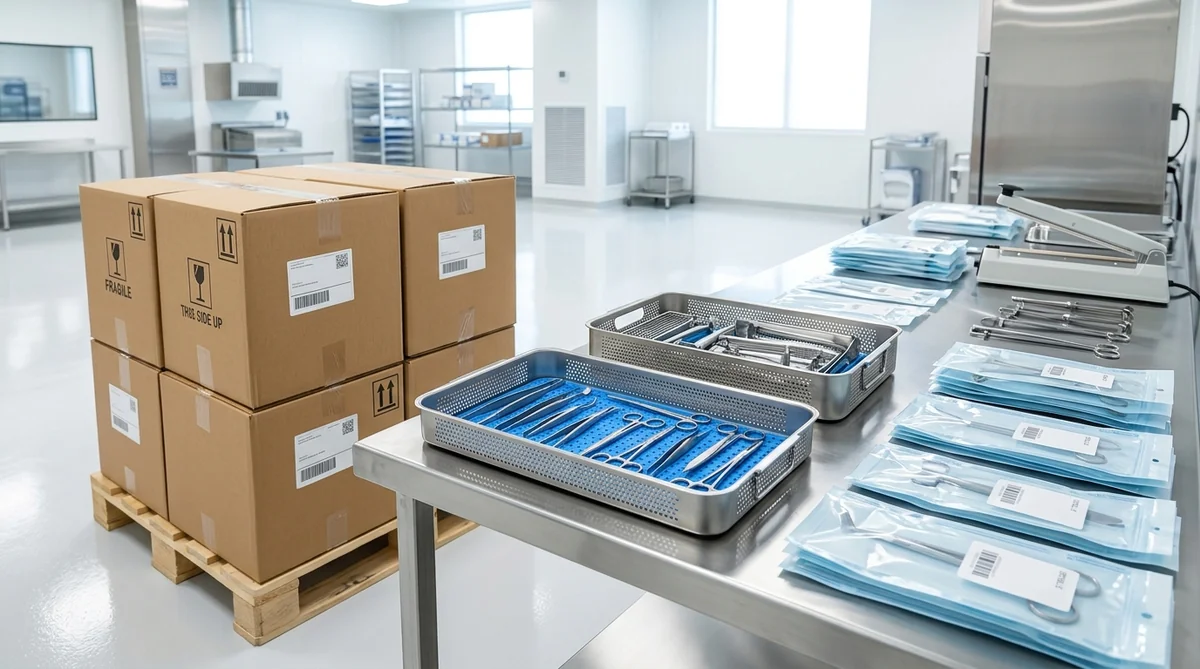
Procurement Summary:•Material Grade: Medical-Grade Martensitic Stainless Steel (AISI 420A/B, HRC 48–52)•Regulatory Compliance: ISO 13485 Certified Quality Management, CE Medical Device Conformity, ASTM A967 Passivation•Key Dental References: HG-D-01 Upper Universal Fig. 150, HG-D-03 Upper Molar Fig. 53, HG-D-04 Lower Molar Cowhorn Fig. 23•MOQ & Samples: MOQ 25 pieces per pattern/size. Sample minimum 5 pieces per pattern/size, paid in advance, quoted separately, never free. Sample 7–10 days, production 35–50 days.•Multi-Division Policy: Order gloves, jackets or surgical instruments on their own — or combine divisions in one order and one shipment if you wish. Ordering all three together is NOT required.•Published: 11 Nov 2026 | Author: Halvex Group, Sialkot
🦷 Request Dental Extraction Forceps Counter-Samples
Source premium stainless steel dental instruments directly from our ISO 13485 certified manufacturing workshops. Submit your pattern list, knurling styles, and branding specifications for physical prototype delivery in 7–10 days. Submit Dental Brief & Request a Quote →---
Anatomical Geometry: Upper vs Lower Arch Mechanics
The primary anatomical distinction in dental forceps design lies between instruments intended for the maxillary (upper) arch and those engineered for the mandibular (lower) arch:
1. Maxillary (Upper) Forceps: In-Line & Subtle S-Curve
Because the maxillary dentition is suspended from the upper jaw, surgeons apply force along the vertical axis of the patient. Maxillary forceps beaks are oriented roughly parallel to or in a gentle continuous S-curve with the instrument handles. This allows the operator's wrist to remain neutral while applying apical and bucco-palatal pressure. The premier representative of this geometry is the Fig. 150 Upper Universal Forceps.2. Mandibular (Lower) Forceps: Right-Angle 90° Beaks
In contrast, mandibular teeth project upward from the lower jaw. To access mandibular crowns without impinging on the maxillary incisors, mandibular forceps beaks are bent at approximately a 90-degree right angle to the handle plane. This configuration allows direct vertical seating into the periodontal ligament space while the operator maintains downward leverage. The classic standard is the Fig. 151 Lower Universal Forceps.---
Direct Comparison: Fig. 150 vs Fig. 151 Universal Extraction Forceps
Universal forceps are the most widely purchased patterns worldwide because their curved, concave beaks conform to both incisors, canines, and premolars across their respective arches.
| Specification Parameter | Fig. 150 Upper Universal | Fig. 151 Lower Universal |
|---|---|---|
| Primary Anatomical Target | Maxillary Incisors, Canines & Premolars (Upper Arch) | Mandibular Incisors, Canines & Premolars (Lower Arch) |
| Beak-to-Handle Angle | Gentle S-curve offset; beaks parallel to handle line | Sharp right-angle (~90°) bend toward the working plane |
| Beak Design | Symmetrical, concave inner surface, parallel closing tips | Symmetrical, narrow concave inner tips with root contouring |
| Handle Ergonomics | Smooth outer curvature with diamond cross-hatch knurling | Contoured palm grip with finger stop; textured knurling |
| Typical Overall Length | 170 mm – 180 mm (7.0 inches) | 165 mm – 175 mm (6.75 inches) |
| Primary Surgical Motion | Apical pressure, slow labial-palatal expansion, rotational force | Apical seating, labial-lingual rocking, controlled luxation |
| Halvex Reference | HG-D-01 Upper Universal Fig. 150 | HG-D-02 Lower Universal Fig. 151 (Inquiry & Quote) |
Request a Factory-Direct Surgical Instrument Quotation
Halvex Group manufactures CE and ISO 13485 surgical instruments with a minimum order quantity of 25 pieces per pattern/size. Sample minimum 5 pieces per pattern/size, delivered in 7–10 days. Request a Quote →---
Specialized Molar Patterns: Fig. 53 vs Fig. 23 Cowhorn
While universal forceps excel on single-rooted teeth and premolars, multi-rooted permanent molars require specialized beak profiles that anchor securely into root bifurcations:
1. Upper Molar Forceps: Fig. 53 (Right and Left Pairs)
Maxillary permanent molars possess three roots: two buccal roots and one massive palatal root. Consequently, standard molar forceps such as HG-D-03 Dental Extraction Forceps Upper Molar Fig. 53 are engineered with asymmetrical beaks:- Buccal Beak: Features a distinct pointed tip designed to engage the buccal bifurcation groove between the mesiobuccal and distobuccal roots.
- Palatal Beak: Features a smooth, broad concave surface that cups the single large palatal root.
2. Lower Molar Cowhorn Forceps: Fig. 23
Mandibular permanent molars possess two substantial roots: one mesial and one distal. The legendary HG-D-04 Dental Extraction Forceps Lower Molar Cowhorn Fig. 23 features two sharply pointed, curved cylindrical beaks resembling cow horns.When squeezed into the furcation between the mesial and distal roots, the conical beaks act as paired wedges, lifting the molar vertically out of its socket through the mechanical principle of the inclined plane.
---
American Pattern vs English Pattern Construction
International dental buyers typically specify one of two dominant manufacturing traditions:
- American Pattern Forceps: Characterized by horizontal hinge pins, smooth joint operation, and cross-hatched diamond knurling across the entire outer handle surface. The handles feature an ergonomic curvature without ring stops, preferred by clinicians in North America, Japan, and Latin America.
- English Pattern (British / European): Built with a heavy box-lock or robust screw hinge, featuring smooth satin-finished handle shanks with deep vertical fluting and a curved palm hook at the handle terminal. This provides firm positive traction when wearing thick surgical gloves.
Halvex Group manufactures both American and English patterns to exact buyer specifications, ensuring proper beak width tolerances and pivot tightness.
---
Metallurgy & Manufacturing Standards for Dental Instruments
Dental extraction forceps are subjected to extreme torsional and compressive loads during tooth elevation. Using subpar steel or inadequate heat treatment leads to bent beaks, joint binding, or catastrophic beak fracture inside the oral cavity.
Halvex Group enforces rigid metallurgical protocols:
- Steel Chemistry (ISO 7153-1 / AISI 420): All forceps blanks are drop-forged from medical-grade martensitic stainless steel (AISI 420A/B). This alloy balances high tensile toughness with the hardness required to prevent beak deformation under clinical torque.
- Vacuum Heat Treatment: Blanks undergo computer-controlled vacuum tempering, achieving a uniform hardness of HRC 48–52.
- Passivation (ASTM A967): Finished instruments pass through multi-stage ultrasonic degreasing and nitric/citric acid passivation baths. This removes all surface free iron and forms a non-porous chromium oxide film (Cr₂O₃).
- Corrosion Verification (ASTM F1089): Production batches undergo standard 30-minute distilled water boil tests and repeated autoclave cycles (134°C at 2.1 bar) to guarantee zero rust formation along pivot joints.
---
Commercial Terms: MOQ, Sampling, and Lead Times
Halvex Group provides transparent commercial terms for dental distributors, surgical wholesalers, and hospital supply contractors:
- Dental Instruments Minimum Order Quantity (MOQ): Our standard MOQ is 25 pieces per pattern/size.
- Sampling Policy: Sample minimum is 5 pieces per pattern/size, paid in advance, quoted separately, never free, and never at bulk price. No sample fees are credited against bulk orders. Sample turnaround is 7 to 10 working days.
- Production Lead Times: Mass manufacturing after final sample sign-off typically requires 35 to 50 business days, depending on pattern variety, laser marking, and packaging requirements.
- Multi-Division Ordering Flexibility: Order gloves, jackets or surgical instruments on their own — or combine divisions in one order and one shipment if you wish. Ordering all three together is NOT required.
---
Frequently Asked Questions
What is the primary difference between Fig. 150 and Fig. 151 extraction forceps?
Fig. 150 is designed for the upper (maxillary) dental arch, featuring an in-line S-curved beak alignment. Fig. 151 is engineered for the lower (mandibular) dental arch, featuring beaks bent at a sharp 90-degree right angle to the handle.Why do upper molar extraction forceps require separate right and left patterns?
Maxillary molars have two buccal roots and one palatal root. The pointed beak must engage the buccal root bifurcation on the outside, while the rounded beak cups the palatal root on the inside. Because this anatomy reverses between the right and left sides of the mouth, separate right (53R) and left (53L) instruments are necessary.How does the Fig. 23 Cowhorn forceps work?
The Fig. 23 Cowhorn forceps features two curved, pointed beaks that penetrate the buccal and lingual furcations of mandibular molars. As the surgeon closes the handles, the beaks act as double wedges, elevating the tooth vertically out of the alveolus.What is the MOQ for dental extraction forceps from Halvex Group?
Our standard commercial MOQ is 25 pieces per pattern/size. Sample minimum is 5 pieces per pattern/size, delivered in 7 to 10 working days.---
Start Your Dental Instruments Inquiry
Whether you are expanding your clinical catalog, building dental procedure sets, or seeking a trusted OEM partner in Sialkot, Halvex Group's technical team is ready to evaluate your brief.
Explore our Surgical Instruments Manufacturer & Exporter Sialkot catalog, review our quality assurance protocols, or submit your technical specifications through our B2B Quote Request Form. You can also contact our team directly at sales@halvexgroup.com or via WhatsApp on +92 343 6432568.