Custom Leather Jacket Manufacturing in Sialkot: B2B Tech Pack Guide
Partnering with an experienced leather jacket manufacturer in Sialkot offers international fashion brands, retail chains, uniform programs, and motorcycle apparel distributors a decisive commercial advantage. Sialkot has earned global recognition as an export hub for premium leather garments, yet navigating hundreds of local stitching facilities and tanneries requires a disciplined, specification-first methodology. A successful commercial program does not depend on glossy marketing photographs. It depends on whether your supplier can translate tech packs into consistent leather grades, durable stitching, accurate sizing, and bulk shipments that match approved golden samples.
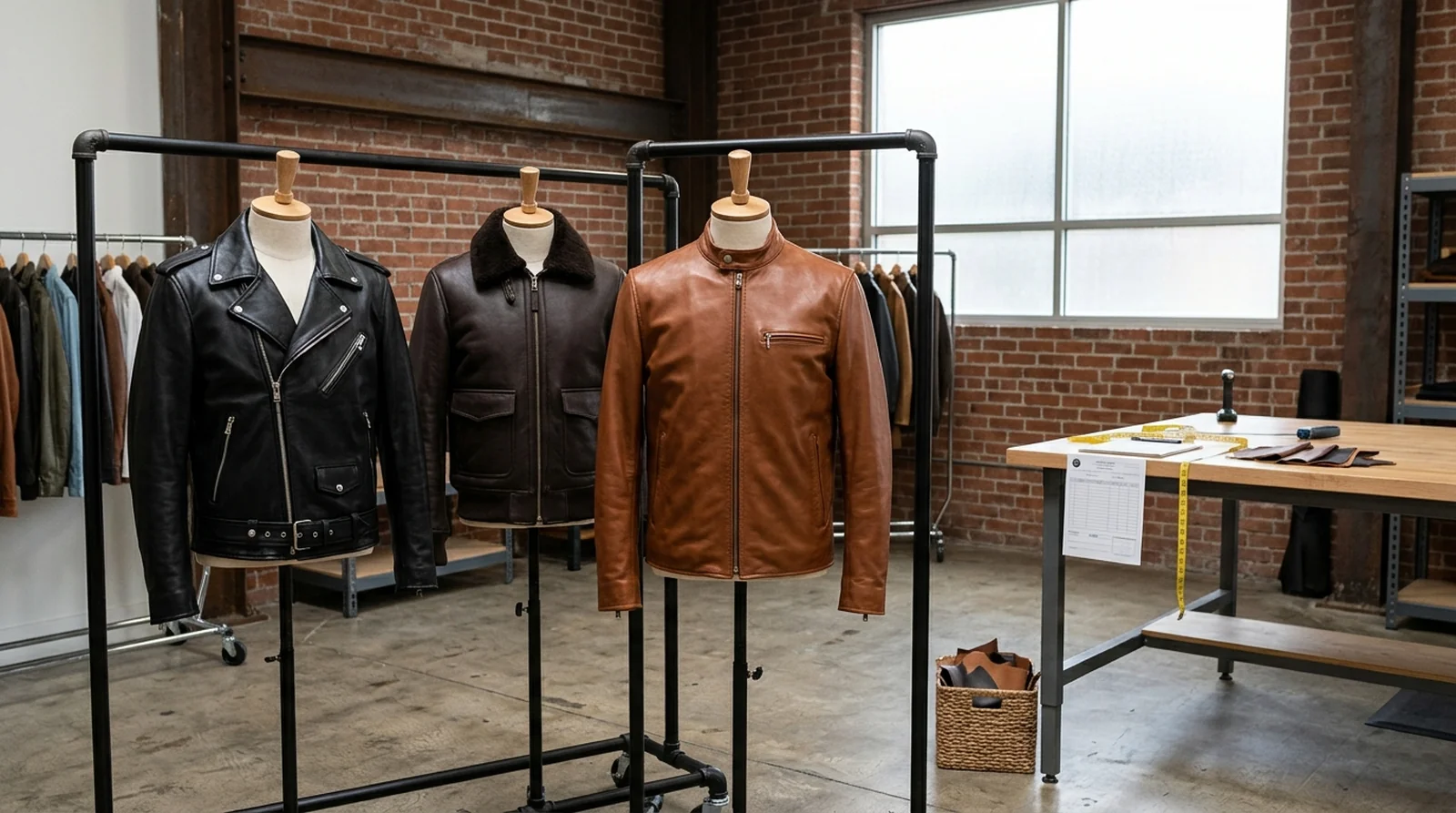
Whether you are launching private label leather jackets for an independent menswear label or sourcing wholesale leather jackets in volume for retail distribution, this guide covers every milestone. We examine hide selection, fit engineering, motorcycle safety standards (EN 17092), price-to-specification comparisons, factory quality control checkpoints, and container packaging protocols.Procurement Summary:•Leather Hides: Top Grain Cowhide, Supple Sheepskin, Natural Goatskin & Heavyweight Buffalo•Customization: Full OEM from buyer tech pack, custom sizing, hardware & lining•Hardware & Trims: YKK zippers (#5 & #8), brass/chrome snaps, custom polyester/satin linings•Sample Turnaround: 7–10 business days with custom brand labels, debossed leather patches & tags
🧥 Start Your Private Label Outerwear Production Line
Partner with an established custom OEM leather jacket manufacturer in Sialkot. Send your design sketches, reference photos, or tech pack for prototype counter-sampling in 7–10 days. Request Outerwear Sampling & B2B Quote →---
Understanding Sialkot Leather Apparel Exports
For decades, Sialkot in northeastern Pakistan has served as the backbone of the global leather apparel export trade, producing garments for prominent European, North American, and Australian brands across fashion and protective wear.
When contracting a wholesale leather apparel exporter or a custom OEM outerwear factory in Pakistan, international buyers benefit from four primary structural advantages:
- Integrated Tannery Cluster: Direct access to domestic tanneries in Punjab processing cowhide, buffalo leather, sheepskin, lambskin, and goatskin allows manufacturers to control drum-dyeing, thickness calibration, hand-feel softening, and chemical compliance locally.
- Generational Craftsmanship: Skilled pattern masters and garment artisans understand the critical nuances of armhole pitch, sleeve rotation, chest draping, and seam reinforcement required for ergonomic outerwear.
- Deep Trims and Hardware Supply: Local facilities work seamlessly with heavy-duty zippers (such as YKK brass, matte black, or antique silver), custom branded metal snaps, debossed leather patches, quilted satin linings, and technical thermal interlinings.
- Established Export Infrastructure: Sialkot exporters manage global logistics daily, providing compliant commercial invoices, Certificates of Origin, airway bills, and customs documentation for international clearance.
However, factory capabilities across the city vary. While modern facilities utilize automated CAD cutting machines and digital seam testers, informal workshops may cut corners on lining weight, zipper strength, or seam allowances. Protecting your brand reputation requires structured vetting or working alongside a local sourcing partner like Halvex Group to coordinate sampling, commercial terms, and pre-shipment inspections.
---
Converting Your Tech Pack into Production-Ready Outerwear
Before sending an inquiry, clearly define the garment silhouette and technical specifications. Review visual references across popular silhouettes in our Leather Jacket Manufacturer & Custom OEM Supplier Sialkot catalog.
| Halvex Reference | Style Category | Classic Silhouette | Typical Shell Material | Target End-Use |
|---|---|---|---|---|
| HG-J-01 | Biker Jacket | Asymmetrical zip, wide lapels, waist belt | 1.1–1.3 mm full-grain cowhide | Moto-lifestyle & fashion retail |
| HG-J-02 | Bomber Jacket | Ribbed collar, waist and cuffs, front zip | 0.8–1.0 mm goatskin or lambskin | Casual streetwear & menswear |
| HG-J-03 | Motorcycle Jacket | Stand collar, pre-curved sleeves, padding | 1.2–1.4 mm high-abrasion cowhide | Protective riding & motorsports |
| HG-J-04 | Tactical Jacket | Multi-pocket utility, storm flap, hood | Water-resistant buffed cowhide/buffalo | Security & outdoor utility |
| HG-J-05 | Fashion Jacket | Minimalist band collar, clean tailored seam | 0.7–0.9 mm soft lambskin | Contemporary fashion & retail |
| HG-J-06 | Genuine Leather Jacket | Classic Western yoke, hand-warmer pockets | 1.0–1.2 mm top-grain cowhide | Everyday casual outerwear |
| HG-J-07 | Varsity Jacket | Wool body with contrasting leather sleeves | Grain cowhide sleeves with melton wool | Collegiate & athletic lifestyle |
| HG-J-08 | Winter Jacket | Extended length, insulated lining, shearling | Heavy cowhide or sheepskin shearling | Cold-weather & winter fashion |
1. Leather Grade & Hide Selection
Selecting the right leather hide directly determines drape, longevity, break-in period, and unit manufacturing cost. An experienced biker jacket manufacturer in Sialkot will provide clear material specifications and swatch cards before sampling begins:- Cowhide: Firm, dense, and exceptionally durable (thickness 1.0–1.4 mm). Best for asymmetrical biker jackets, cafe racers, and heavy commercial workwear. Specify full-grain or top-grain, drum-dyed through the core, with an aniline or semi-aniline finish for natural grain visibility.
- Lambskin & Sheepskin: Extremely soft, lightweight, and supple with a fine grain (thickness 0.6–0.9 mm). Ideal for high-end fashion jackets, women's luxury outerwear, blazers, and lightweight bombers. Inspect tensile strength at pocket corners, as thinner lambskin requires proper interfacing to prevent tearing.
- Goatskin: Highly resilient, supple, and naturally water-resistant with a characteristic pebbled grain texture. Outstanding strength-to-weight ratio. Ideal for A-2 flight jackets, classic bombers, and casual menswear.
- Water Buffalo: Coarse, heavy, and rugged with a deep grain pattern. Substantially stiffer than cowhide initially, softening over time with wear. Best for vintage-look jackets, distressed utility wear, and heavy-duty outerwear.
| Leather Property | Full Grain Cowhide | Premium Lambskin | Natural Goatskin | Water Buffalo |
|---|---|---|---|---|
| Typical Thickness | 1.0 – 1.4 mm | 0.6 – 0.9 mm | 0.8 – 1.1 mm | 1.1 – 1.5 mm |
| Drape & Softness | Medium (Breaks in) | Ultra-soft, immediate drape | Supple with pebble feel | Heavy, rigid initially |
| Abrasion Durability | Exceptional | Moderate | High | Very High |
| Tensile Tear Strength | Very High | Moderate | High | Very High |
| Target Silhouette | Biker, Cafe Racer, Moto | Tailored Fashion, Blazer | Bomber, Field Jacket | Heavy Utility, Vintage |
| Relative Material Cost | Mid-to-High | Premium | Moderate | Economical to Mid |
2. Hardware, Linings & Thread Specifications
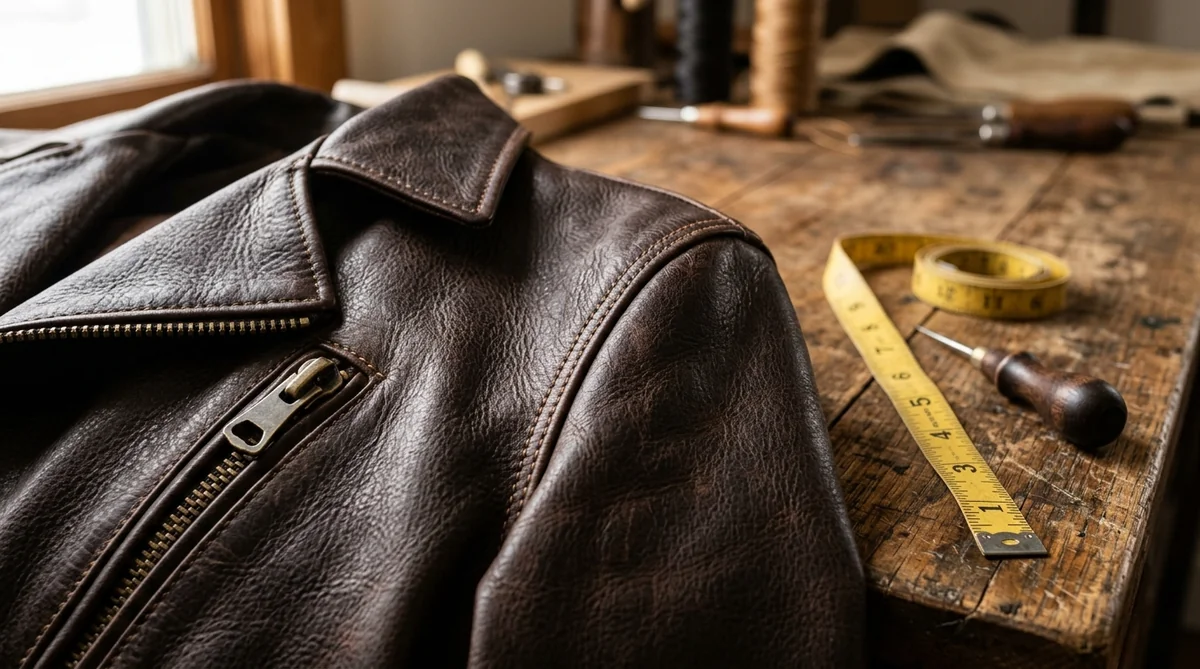
The perceived quality and functional lifespan of leather outerwear depend on its internal hardware and trims:- Zippers: Always specify genuine metal zippers (YKK or equivalent). Front closures typically use #8 or #10 gauge brass, antique silver, or matte black teeth. Sleeve cuffs and exterior pockets utilize lighter #5 gauge zippers.
- Linings: For fashion jackets, lightweight 100% polyester satin or cupro provides a luxurious hand feel and smooth glide. For cold-weather jackets, specify 80g to 120g diamond-quilted polyester thermal batting or zip-out detachable linings.
- Thread & Reinforcement: Seams must be constructed using heavy-duty bonded polyester or nylon thread (Tex 70 to Tex 90) with 7–9 stitches per inch. High-stress points like pocket corners, armpits, and zipper terminations require double back-tacking and internal fusible interfacing.
3. Private Label Branding & Customization Options
Transforming standard outerwear silhouettes into your proprietary brand collection includes:- Debossed Leather Patches: Genuine leather neck labels hot-stamped with your logo and crest.
- Woven Brand Labels: High-definition damask woven labels sewn into the back neck facing.
- Custom Metal Hardware: Laser-etched zipper pullers and branded heavy-duty snap buttons.
- Multilingual Care Labels: Compliant fiber content, leather cleaning instructions, and country-of-origin tags.
- Custom Retail Packaging: Heavyweight branded hangtags with string seals and barcode stickers.
Technical Riding Garments: EN 17092 Safety Norms
Motorcycle protective jackets require specialized engineering far beyond street fashion. Under PPE Regulation (EU) 2016/425, motorcycle jackets sold in Europe and the UK must undergo accredited type-examination under EN 17092:
- Class AAA: Highest level of protection against high-speed sliding abrasion and burst impact, typically reserved for one-piece and two-piece track riding suits.
- Class AA: The standard benchmark for touring and commuter motorcycle garments, offering balanced abrasion protection and ergonomic mobility.
- Class A: Lightweight protective garments engineered for urban and summer riding.
- Impact Armor: Garments must include internal pockets for CE Level 1 or Level 2 impact protectors at the shoulders and elbows (EN 1621-1) and back (EN 1621-2).
Buyer Rule: When marketing a protective riding jacket, require your manufacturer to share valid laboratory test summaries from an accredited body (e.g., SATRA, Ricotest, or TÜV Rheinland). If a jacket is only styled like a biker jacket for fashion wear, clearly label it as non-protective outerwear to avoid regulatory liability.
---
The 4-Stage Sample & Fitting Process
Launching a custom private label line requires a disciplined development loop:
- Tech Pack Analysis: The manufacturer reviews measurements, size grading increments (XS to 3XL), seam allowances, and hardware artwork.
- Pattern Drafting & Cutting: Digital CAD plotting creates accurate size masters, ensuring proper sleeve pitch, armhole depth, and back drape.
- Prototype Assembly: Counter-sample assembly takes 7 to 10 working days. Physical samples are dispatched via express courier (DHL/FedEx) for client fitting review.
- Order Confirmation & Bulk Production: Written revision notes are incorporated into the golden counter-sample before bulk cutting commences.
Review how our five-stage sourcing process manages sample approvals and production tracking on our manufacturing and production process page.
---
Quality Control Inspection Checklist for Overseas Buyers
Leather outerwear is sensitive to crushing, creasing, and transit humidity. Maintaining garment presentation from Sialkot to your retail floor requires strict packing management.
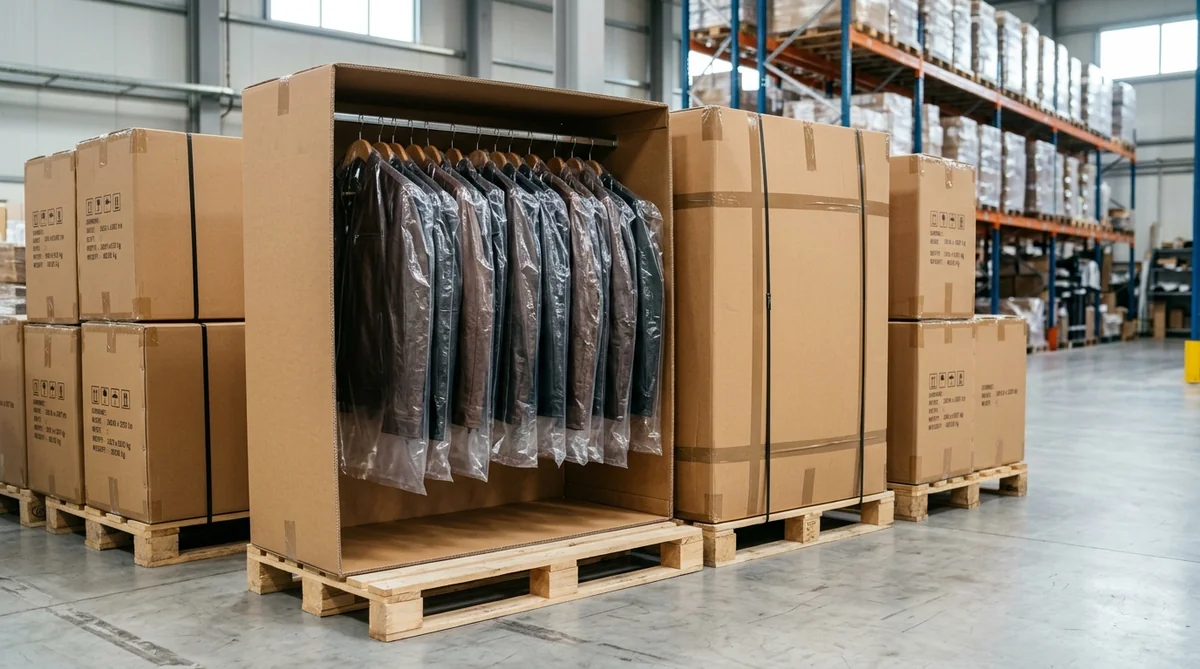
As detailed on our international trade and global presence page, export protocols include:
- Pre-Shipment AQL Audits: Prior to packing, random sampling according to ISO 2859-1 (AQL 1.5 for major functional flaws; 2.5 for minor cosmetic defects) evaluates leather color consistency across adjacent panels, seam tension, zipper function, and measurement accuracy against the approved spec sheet. Read more on our quality inspection and verification page.
- Moisture Prevention: Leather contains residual organic moisture. Master cartons must include silica gel packs, and shipping containers should be fitted with desiccant poles to prevent mold development during sea freight transit.
- Export Packaging Options:
- Flat Carton Pack: Jackets folded with protective acid-free tissue paper separating metal zippers from leather panels, placed inside individual polybags, and packed 10–12 jackets per heavy-duty 5-ply corrugated carton.
- Garment-on-Hanger (GOH) Wardrobe Containers: For luxury retail programs, jackets travel suspended on heavy contoured wooden or plastic hangers inside specialized wardrobe shipping cartons, eliminating transit creasing.
---
Commercial Terms: MOQ, Lead Times, and Pricing
Procurement managers must plan inventory cycles carefully around factory minimums:
- Stock Silhouettes with Standard Cowhide/Goatskin: For proven patterns using regional tannery stock colors (black, dark brown, tan), trial orders can often start at accessible minimums (e.g., 25 to 50 pieces).
- Custom Private Label Collections: Garments requiring custom-dyed leather colors, bespoke metal hardware molds, proprietary printed lining fabric, or custom debossed trims typically require an MOQ of 100 to 200 pieces per style/colorway.
- Sampling Turnaround: Proto-sample development generally requires 7 to 10 working days depending on leather availability and pattern drafting.
- Bulk Production Timelines: Mass manufacturing after final sample sign-off typically requires 35 to 50 days depending on order volume and seasonal factory capacity.
---
Where Halvex Group Fits in Your Outerwear Supply Chain
Halvex Group is a B2B supplier and sourcing partner headquartered in Sialkot, Pakistan. We coordinate production across verified specialized leather garment facilities, tanneries, and export packing units in our industrial cluster.
Our multi-division organization offers international buyers:
- Design & Technical Alignment: We translate reference sketches or physical samples into rigorous production specifications.
- Multi-Category Sourcing Consolidation: Overseas procurement teams can consolidate leather outerwear orders alongside industrial and protective gloves or stainless surgical instruments through a unified commercial team.
- Independent On-Site Quality Control: Our inspection teams perform incoming hide checks, in-process stitching monitoring, and final AQL audits before container dispatch.
- Transparent Commercial Commitments: An inquiry is never an order. Specifications, lab certifications, sampling budgets, and shipping options are explicitly verified in writing for every individual project.
Learn more about our organizational structure on the About Halvex Group page or review our production quality frameworks.
---
Frequently Asked Questions
What is the MOQ for wholesale leather jackets from Sialkot?
Minimum order quantities depend on leather selection, custom dyeing, and bespoke hardware tooling. For stock silhouettes in standard black or brown cowhide, trial orders may start around 25 to 50 pieces. Full private label programs featuring custom-dyed leather, proprietary lining prints, or branded zipper molds typically start at 100 to 200 pieces per style. Always confirm MOQ per style and size breakdown during the quotation stage.Can Sialkot manufacturers produce custom private label leather jackets?
Yes. Sialkot is one of the world's foremost centers for OEM leather garment manufacturing. Manufacturers regularly produce fully customized collections featuring custom metal zipper pullers, branded snap buttons, debossed leather neck patches, custom woven labels, printed linings, and bespoke retail hangtags.Which leather type is best for bulk wholesale jacket orders?
Material selection depends on target end-use and price point. Cowhide (1.1–1.3 mm) is the industry standard for durable biker jackets, cafe racers, and protective motorcycle apparel. Lambskin (0.7–0.9 mm) delivers a soft, lightweight drape ideal for luxury fashion and tailored retail garments. Goatskin provides a lightweight, supple, and naturally weather-resistant option for classic bombers.Which safety standards apply to motorcycle leather jackets?
Motorcycle jackets sold in Europe and the UK must comply with PPE Regulation (EU) 2016/425 under EN 17092 (covering garment abrasion, seam burst strength, and tear resistance across Classes AAA, AA, A, B, and C). Shoulder and elbow impact armor must meet EN 1621-1, and back protectors must meet EN 1621-2.How do I accurately compare leather jacket quotes from different suppliers?
Compare quotes line-by-line using a standardized technical specification: verify leather grade (full-grain vs. split), hide thickness, lining fabric grammage, zipper brand/material (brass vs. zinc alloy), internal interfacing quality, and stitching thread type. A significantly lower quote almost always indicates thinned leather, inferior lining, or omitted safety stitching.What should be included in a leather jacket quotation request?
A complete RFQ should include the desired silhouette or Halvex catalog reference (HG-J-01 through HG-J-08), leather type and finish, lining preference, hardware specifications, size chart with tolerances, branding artwork files, packaging requirements (flat vs. wardrobe pack), target order volume, and destination delivery port.---
Ready to Develop Your Leather Jacket Line?
Whether you are launching a private label outerwear brand, updating an established retail collection, or sourcing heavy-duty motorcycle jackets, our technical sourcing team in Sialkot is ready to evaluate your brief.
Explore our Leather Jacket Manufacturer & Custom OEM Supplier Sialkot catalog, review our manufacturing workflow, or submit your tech pack directly through our B2B Quote Request Form. You can also contact our team at sales@halvexgroup.com or via WhatsApp on +92 343 6432568.